Fascism – Concepts and Theories
Version: 1.0, in: Docupedia-Zeitgeschichte, 31.08.2017
https://docupedia.de/zg/esposito_fascism_v1_en_2017
DOI: https://doi.org/10.14765/zzf.dok.2.1111.v1
Begriffe, Methoden und Debatten
der zeithistorischen Forschung

Version: 1.0, in: Docupedia-Zeitgeschichte, 31.08.2017
https://docupedia.de/zg/esposito_fascism_v1_en_2017
DOI: https://doi.org/10.14765/zzf.dok.2.1111.v1
Copyright © 2017: Clio-online – Historisches Fachinformationssystem e.V. und Autor:in, alle Rechte vorbehalten. Dieses Werk ist zum Download und zur Vervielfältigung für nicht-kommerzielle Zwecke freigegeben. Es darf jedoch nur erneut veröffentlicht werden, sofern die Einwilligung der o.g. Rechteinhaber vorliegt. Dies betrifft auch die Übersetzungsrechte. Bitte kontaktieren Sie: redaktion@docupedia.de.

In view of the success – throughout Europe – of right-wing populist and extremist parties and movements such as the Alternative für Deutschland, the Freiheitliche Partei Österreichs, the Front National, or Jobbik as well as the conflict in the Ukraine and the spread of IS terrorism, the term fascism has experienced a renaissance. However, its use as a discursive weapon threatens to blunt the concept's analytical incisiveness, a development that has had precursors. As Karl Dietrich Bracher noted in 1976, "over time, important historical and political terms […] not infrequently suffer the fate of undergoing such significant changes in their original content and meaning, of being utilized in such different ways, and of being deployed and extended as discursive weapons in such a way that their academic value becomes highly questionable. This is especially true of the frequently employed term fascism."[1] Thus, Bracher criticized the inflationary use of the concept of fascism that had taken root in the wake of the "renaissance of western Marxism" in the context of "1968". In keeping with Max Horkheimer's dictum – whoever is not prepared to talk about capitalism should also remain silent about fascism – fascism had become a "commonplace expression" in the student movement.[2]
Entrenched feuding in West Germany between left and right and between young and old were detrimental to comparative analysis of fascism. This was also true of the use of the fascism concept by the leadership and by academic circles in East Germany, which situated West Germany in direct continuity with Nazi Germany. Consequently, attempts to determine what fascism was and is were long overshadowed by the ideological conflicts of the Cold War era.
These ideological battles between Marxists and anti-Marxists are (for the time being) a thing of the past. The end of such controversies lent momentum to research on fascism, first in American and British scholarship and then to a certain extent in Germany. The questions of what fascism is and whether use of fascism as a generic term is justified, stood at the center of this work. Is National Socialism a form of fascism? If so, does the singularity of the crimes against humanity committed by the Nazis remain evident, even when National Socialism is subsumed under the generic term fascism? How useful are neologisms such as para-fascism for distinguishing between "fascistisized" authoritarian-conservative regimes – for example, in the Baltic states or Salazar's Estado Novo in Portugal – from forms of fascism in the strict sense? [3] Should the concept of fascism be applied only to Europe or can it also be used for comparable phenomena around the world? Is referring to neo-fascism justifiable in cases of right-wing populist, extremist, and terrorist movements in the post-1945 era?[4] Does it make sense to apply the concept of fascism to intellectuals and their writings from the period before World War I?[5]
This text does not aim to give conclusive answers to these nor to a series of further questions, as it is not likely that definitive answers will ever be forthcoming. However, it hopes to demonstrate that the concept of fascism opens the way to asking meaningful questions and enables comparisons, thus generating valuable new insights in scholarship. To this end, this article attempts to provide one answer to the question of what phenomenon has come into view and been characterized in the many analyses of fascism that have been conducted since the 1920s.
Although Italy's Fascists and Germany's National Socialists were the only movements that succeeded in establishing fascist regimes on their own, the interwar period spawned numerous other fascist movements. Spain's Falange[6], Hungary's Arrow Cross[7], and Romania's Legion of the Archangel Michael (later Iron Guard)[8] grew in the slipstream of the success of Italian and German fascism, but in contrast for example to Croatia's Ustasha[9] or Norway's Nasjonal Samling or National Unity,[10] they gained a certain level of significance in their respective countries without German military occupation. According to Robert Paxton, every European country ”indeed all economically developed nations with some degree of political democracy including the United States, Argentina, Brazil and Japan, had some kind of fascist movement and at least a rudimentary fascist organization or two in the twenty years after 1919".[11]
The "crisis of the liberal system" (Nolte), excessive demands on newly created democracies, and anti-bourgeois and anti-Marxist sentiments affected all of Europe during the interwar period. Also the established democracies France and the United Kingdom saw the ascent of fascist movements: the Croix de Feu, the Chemises vertes, and die British Union of Fascists.[12] Furthermore, several conservative authoritarian regimes, such as Franco's rule in Spain and Salazar's Portuguese Estado Novo, underwent partial ”fascistization".[13]
The following survey of scholarship on the concept of fascism and theories of fascism has as its starting point Italian Fascism. Not only was the generic term derived from this first fascist movement and used to designate and understand similar movements. Italian Fascism was in fact the first model for comparable movements forming across Europe.[14] As Arnd Bauerkämper has noted, "Although the attractiveness of the Italian model declined in the 1930s, the semantic extension of 'fascism' to a generic term ultimately reflected the contemporary realization that the movements and groups labeled in this way referred to the Italian model, albeit to varying degrees." [15] As is argued at the end of this article, the more radical National Socialism would eventually replace, in the course of the 1930s, Italian Fascism in the role of paragon.
This article addresses only "historical" fascism. In other words, it explores the ideology upon which European fascist movements were founded and by which they were fueled in the roughly three decades before 1945. However, by setting this limitation, several decisions have already been made that are by no means supported by all researchers of fascism. On the one hand, advocates of a "praxeological" approach to fascism deny that a meaningful definition of fascism based on ideology is possible. They instead propose an understanding of fascism as a lifestyle and habitus of violence that determines political action.[16] On the other hand, restricting the scope of one's attention to Europe, focusing on Italy and Germany, and limiting the temporal framework to the "second Thirty Years War" can also be questioned, since the fascist movements that sprang up in Europe during the interwar period share various similarities with contemporary antisemitic, xenophobic, and homophobic militant groups as well as with imperial Japan in the 1930s and with Argentinian Peronism in the period from 1946 to 1955.[17]
This article will first briefly examine the emergence of Italian Fascism and provide insight into Italian Fascists' self-perception. Understanding the meaning which Italian Fascists imparted to the concept reveals its original form, which has been modified since then. Second, taking the contemporary conceptualizations of fascism developed by its Marxist, liberal, and conservative opponents as a starting point, this article reviews research on fascism during the Cold War. Third, the approaches taken by more recent research on fascism will be discussed and a survey of current fields of empirical work will be presented. A concluding section summarizes the usefulness of the concept of fascism.
A brief look at post-Unitarian Italy reveals that, during the last third of the nineteenth century, the term fascio simply referred to a political alliance.[18] In the early 1890s, for instance, Sicilian farm workers joined together in the Fasci siciliani to organize strikes and protests against landowners and unsustainable working conditions on their estates.[19] In 1914, socialists and syndicalists of nationalist-revolutionary persuasion founded the Fascio d'azione to campaign in favor of Italy entering the war on the side of the British-French entente. This and other similar interventionist alliances were the origins of the Fascist movement, which was founded in 1919 and would bring to light other aspects of the term fascio.
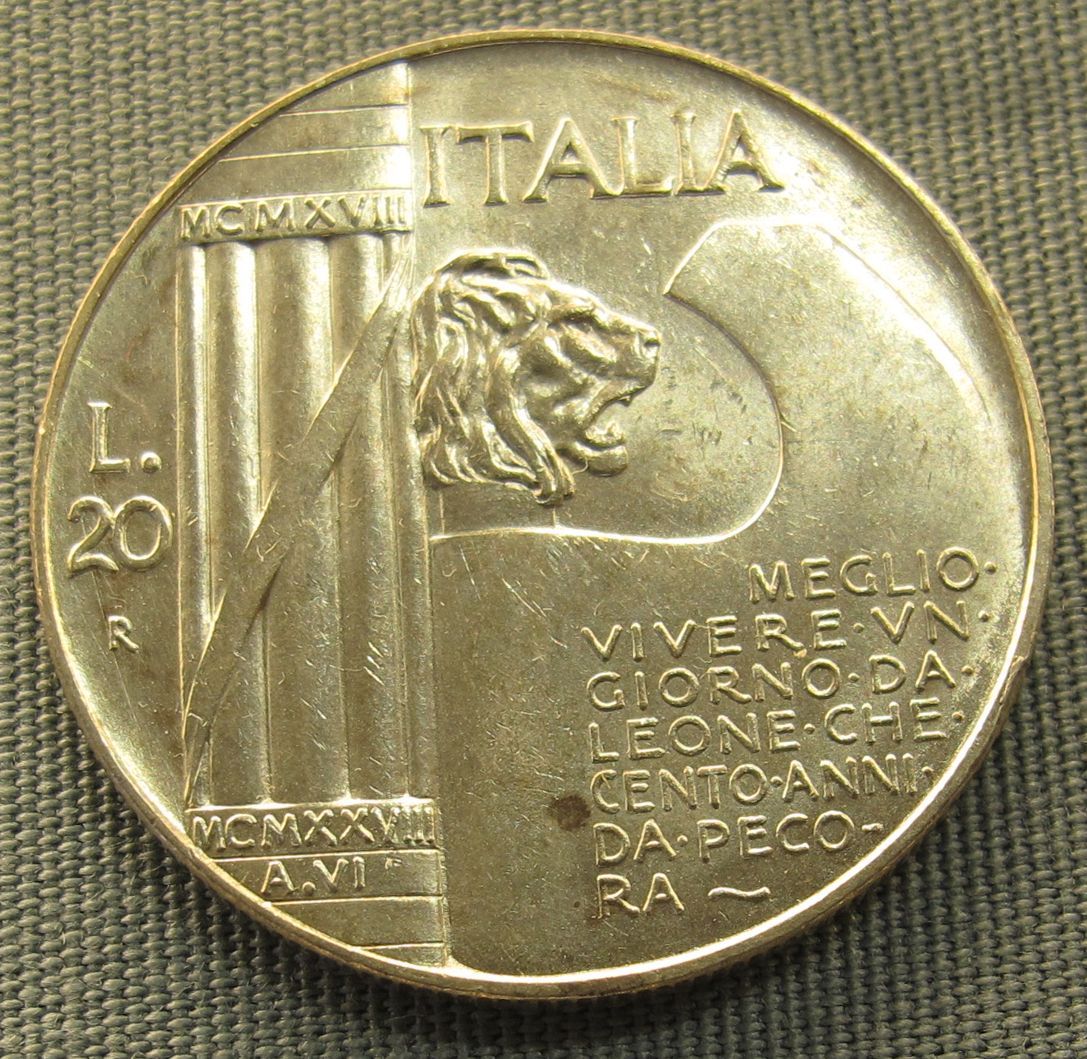
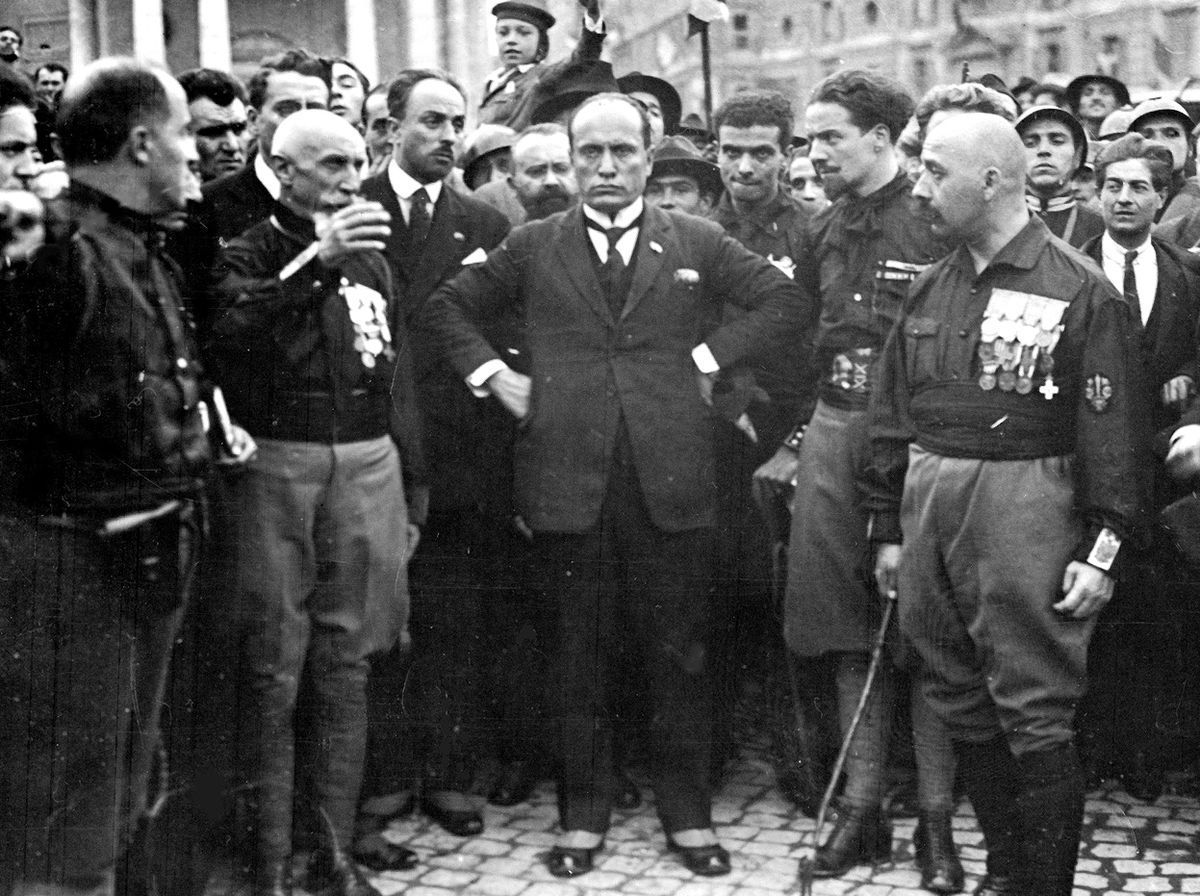
The latter is derived from the Latin word fascis. In the Roman Empire, this denoted a bundle of rods surrounding an axe that was "carried by the lictores, civil servants, as they marched in front of the Roman magistrates (consul, praetor), as a sign of the magistrates' imperium" or power to command.[20] The symbolic meaning of the bundle of rods in antiquity was supplemented in more recent history – in particular in the iconography of the French Revolution but also in the United States – primarily by unity and power. For the Fascists, who made it a state emblem in 1926, it also signified discipline and order, as well as a new beginning and reconnection with the Roman past.[21] Among the nationalist renegades who campaigned in favor of Italy's entry into World War I on the side of the entente during the so-called maggio radioso – the "radiant May" of 1915 – was former socialist Benito Mussolini (1883-1945).[22] Together with various futurists, syndicalists, former Arditi (elite storm troopers) and other veterans, he founded the Fasci italiani di combattimento, a leftist nationalist anti-party, on 23 March 1919 in Milan's Piazza San Sepolcro.[23] Militant nationalist activism, a propensity for violence radicalized by war, anti-bourgeois and anti-Marxist attitudes, and contempt for the established political caste and practices served as the unifying elements of this extremely disparate alliance.
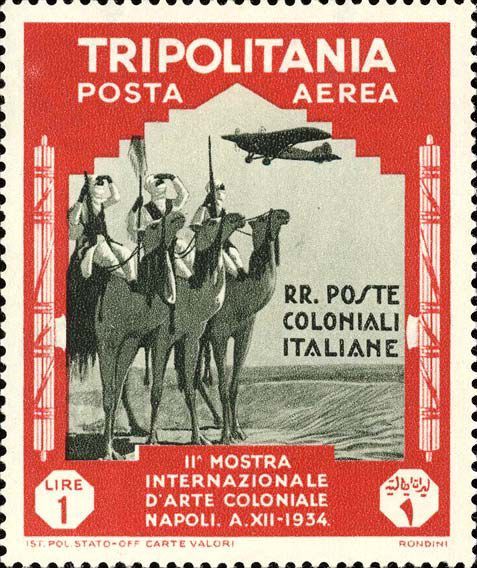
The initially slight yet growing fascination which Fascists exerted was based on the aura of renewal, on the proclaimed "third way", which was neither right nor left, and on the idea of unity and power of the nation that they advocated.[24] The latter was to be (re)generated through violence, if necessary.[25] This vision of a "Volksgemeinschaft", i.e. of the national and/or ethnic community", in which social conflicts between workers and the bourgeoisie, as well as discontent with industrial modernity, would be overcome, proves to be one of the core similarities that can be discerned between different forms of fascism.[26]
At this point one can already identify a key benefit of the concept of fascism: it offers a means of grasping the ultra- or radical-nationalistic model of political order that became established alongside liberalism, conservatism, and communism – for the first time in post-World War I Italy. Fascism studies' various approaches help to outline more clearly this model of a modern societal order based on the idea of an absolutized nation or people and to differentiate it from the competing liberal, Marxist, or conservative-authoritarian models. Moreover, the concept makes it easier to compare the specific solutions proposed for dealing with the challenges of modernity. It also serves to identify the differences that existed between the many specific national variants.[27]
In Italy, the envisaged "third way" was initially embodied by the charismatic poet, war hero, and comandante Gabriele D'Annunzio, who campaigned against Italy's liberal political caste and the Allies' "mutilated victory".[28] But after D'Annunzio's attempt to annex the Croatian port of Fiume (Rijeka) failed at the end of 1920, the Black Shirts and their local leaders increasingly rallied around Mussolini instead. The election victory of the Socialists in November 1919 marked the beginning of a two-year phase of intensified class conflicts, the biennio rosso. Still struggling with the aftereffects of the war effort and subsequent demobilization, the political and economic system was now confronted with a growing wave of strikes and land occupations. To ward off the specter of a Bolshevik revolution, but also to take action against national minorities in the northeastern part of Italy, the squadre d'azione, paramilitary squads, formed and brought fascism an increasing number of followers.[29] In so-called punitive expeditions, these squads brutally attacked agricultural workers and local socialist institutions, especially in the Po Valley.
It was in the course of this violence and of the ideological turn towards the right during the years 1920 to 1922 that the very fascismo emerged that was the basis for all later mutations. Attention should therefore be paid to the self-perception of these Fascists, who in November 1921 founded a militia party, the Partito Nazionale Fascista (PNF) and established the first fascist regime during the 1920s. They were the first to define fascism.
In January 1928 Foreign Affairs published the translation of an article written by the erstwhile minister of public education in the Fascist government, Giovanni Gentile. Several versions of this article exist either as ”Origins and Doctrine of Fascism" or "The Essence of Fascism"; the 1928 English translation was entitled "The Philosophic Basis of Fascism". In the text, Gentile stated: "In the definition of Fascism, the first point to grasp is the comprehensive, or as Fascists say, the 'totalitarian' scope of its doctrine, which concerns itself not only with political organization and political tendency, but with the whole will and thought and feeling of the nation."[30] The "totalitarian character" was based not least on the fact that Fascism intended to bring about a different, greater Italy by creating a "New Man".[31] Its aim was an ”anthropological revolution": On the one hand, eugenic measures were to be implemented to physically strengthen the "Italian race" and make it fit for warfare. On the other hand, education and indoctrination were supposed to fundamentally change the mentality of Italians and produce "modern Romans" – a warlike and disciplined people who placed the interests of the community before those of the individual.[32]
In a speech in Perugia on 30 August 1925, Alfredo Rocco, the Italian minister of justice from 1925 until 1932, stated that fascist doctrine was the antithesis to the "liberal-democratic-socialist concept of society and the state". For fascism, the state was the "purpose and the individual the means".[33] Fascism sought to replace the "atomistic and mechanical society" marked by class conflicts with an "organic and historical" community in which the individual served the community and was to be subordinated to it through "total sacrifice, if necessary". The Nazi motto "you are nothing, your people is everything" was prefigured here.
According to Ernst Nolte, fascism's key characteristics were – besides the Führerprinzip, the party army, and totalitarian claims – antithetical: it was anti-Marxist, anti-liberal, and anti-conservative.[34] But what defined fascism, beyond its claim that it would totally transform society by creating a New Man, its declared opposition to other political groups, and its organizational specifics? Mussolini did not commit himself and stated in March 1921: "[…] we allow ourselves the luxury of being aristocratic and democratic, conservative and progressive, reactionary and revolutionary, legal and illegal, depending on the circumstances of the time, the place, the environment."[35] In his speech at the Fascist Congress in November 1921, where the PNF was founded, Mussolini refused to be "a beardless Moses who tells you 'Here are the tablets of the law, swear by them!' […] The concept of the 'nation' is our point of departure, which is for us a fact that can neither be obliterated nor overcome."[36] Thus, whereas anticlerical and anti-monarchist convictions or corporatist visions of a different economic order might be given a lower priority or be sacrificed—the ultranationalist objective of renewing the nation was set in stone.
What do the first Fascists' efforts to describe their syncretistic ideology, i.e. a conglomerate of various, at times contradictory ideological elements, reveal? On the one hand, the Fascists proved to be flexible, for their goal was to gain power, which called for temporary pacts and abandoning previously held positions. Thus, speaking in Udine on 20 September 1922, Mussolini proclaimed: "Our program is simple: we wish to govern Italy."[37] This statement is often quoted to substantiate the claim that ideology was irrelevant to Fascists. However, the rest of Mussolini's speech shows that the aim was not only power for its own sake. That power was to be employed to restore Italy to its former greatness, to renew the "immortal fatherland" that had appeared in ancient Rome, but also in the Risorgimento and in wartime.
In keeping with the scientism that was typical of the second half of the nineteenth century, Marxism had made use of the term "scientific" to position itself in the field of political conflict. But it was precisely this "scientific" spirit that appeared, only a few decades later, strangely "anemic" and fruitless to a growing multitude of people seeking political orientation. As a reaction to the "disintegrating", historistic spirit of modernity, which deprived people of a transcendental point of reference, and before the backdrop of World War I, a decidedly antithetical ideology emerged that – building on Nietzsche's philosophy as well as Georges Sorel's teachings – stressed faith and myth, style, aesthetics, and action.[38] This occurred, moreover, in the context of a transformation of the political in advanced industrial modernity, which was marked by the growing significance of the "masses", who had to be mobilized and whose desire for participation had to be met. Rather than relying on theoretical debates concerning political economy, on elections, strikes, and on parliament, the Fascists placed their bets on rites and cults, on myths, and on (violent) deeds on the street.
Due to both this transformation of the political field as well as to the convictions of fascism's contemporary opponents that it was "nothing but terror, violence, and indeed a bourgeois reflex of violence",[39] later research also neglected analysis of fascist ideology. National Socialism was either dismissed – by functionalists – as a "propagandistic simulation", or reduced – by intentionalists – to Hitler's world view and the ideas of his entourage – Goebbels, Himmler, and Rosenberg.[40] Regarding Italian fascism, Wolfgang Schieder recently asked "whether in view of Fascism's conglomerate of political ideas it might be better considered a retrospective justification for a preceding praxis"?[41]
These doubts regarding whether there is any such thing as a fascist ideology were and are also based on the fact that "scientific Marxism" was always regarded as the standard for ideology. But on closer examination, it becomes evident that Marxism was not a consistent, non-contradictory, static edifice of ideas either.[42] Despite the supposedly firm foundation that Marx's and Engels' writings provided, Marxism spawned numerous mutations and a multitude of interpretations and heresies that were combated not least by Moscow. Consequently, it makes sense heuristically to bid farewell to an understanding of ideology based on the chimera of "scientific Marxism" and its supposedly static doctrinal edifice, and instead to approach ideologies, as Michael Freeden suggests, as a cluster of dynamic, mutually determined political concepts.[43]
The combination of these political concepts – for example, the nation, the people, the state, the Führerprinzip, community, racism/anti-Semitism, and violence, as well as the antagonistic notions of fascism's political opponents, such as the individual, class, and freedom – appear in a particular constellation. On the one hand, this is specific and stable enough to allow us to distinguish between competing ideologies with their respective conceptual clusters. On the other hand, this constellation is sufficiently dynamic so that a diachronic development or adaptation of the ideology to prevailing circumstances is conceivable, as is a synchronic "pluralism". For a member of the Bund Deutscher Mädel (BDM, League of German Girls) on the "home front", the word Volksgemeinschaft evoked ideas quite different than it did for an Einsatzgruppenführer from the "fighting administration" of the Reich Security Head Office. Thus, seen from a synchronic perspective we may have different fascists associating diverging and to a certain extent contradictory ideas with one and the same term. Moreover, central concepts such as the nation or violence could take on a varying range of meanings for one and the same fascist, depending on whether the movement was attempting to increase the number of its followers, gain power in the state, consolidate the power gained, or was conducting a war of extermination.[44] This ideological "fluidity" and the "fuzziness" of central concepts would prove to be important factors for the success of fascist movements.
Due to this synchronic and diachronic pluralism, fascism – like the other "isms" – cannot be defined in essentialistic, rigid terms. Neither Marxism – which in contrast to fascism has identifiable "Bibles", primers, and theoreticians – nor fascism, which from the outset presented itself as an anti-intellectual ideology of action, can be grasped on the basis of a static understanding of ideologies. Criteria catalogs and ideal type definitions, some of which are presented below, are heuristically indispensable. But their static nature should not stand in the way of a perspective that recognizes fascism as a fluid and dynamic phenomenon.
The earliest analyses of fascism came from its communist, social democratic, liberal, and conservative opponents.[45] Communists saw fascists as the lackeys of capital.[46] Despite fascism's "very diverse" social base, ranging from peasantry and (declassed) petit bourgeois to the working class, it pursued a "politics of the bourgeoisie". The social fascism theory, according to which, as Stalin asserted in 1924, social democracy could be regarded as a "moderate wing of fascism" and social democrats seen as "twin brothers" of fascists, was particularly disastrous.[47]
Although the social fascism theory was officially rejected in 1935 – too late to avert the worst from happening in Germany – the definition of fascism formulated in December 1933 by the Georgi Dimitrov, who became head of the Comintern in 1934, remained the basis of official doctrine and research, even after World War II. "Fascism in power" was "the openly terroristic dictatorship of the most reactionary, chauvinistic, and imperialistic elements of finance capital".[48] The thesis that fascism was an agent of "state monopoly capitalism" (stamocap) became an unshakeable dogma in East German research. And although Western "materialistic" explanations of fascism – such as those proposed by the Frankfurt School, with its interpretations inspired by psychoanalysis and cultural criticism – should not to be reduced to this theoretical core, they too were rooted in and remained linked to nexus of capitalism and fascism mentioned above. It would prove to be an impediment to research on fascism.[49]
![Nürnberg Reichsparteitag 1927, Gruppenaufnahme, von rechts: Franz Pfeffer von Salomon [Franz von Pfeffer], Adolf Hitler, Gregor Strasser, Rudolf Hess, Heinrich Himmler, rechts SA-Standarte. Fotograf unbekannt, Quelle: Wikimedia Commons / Bundesarchiv Bild 146-1969-054-53A (CC-BY-SA 3.0).](/sites/default/files/inline-images/1920.jpg)
Liberal, social democratic, and conservative anti-fascists drew another kind of parallel in the 1920s and 1930s when they drew attention to analogies between fascism and Bolshevism. The concept of totalitarianism was initially shaped in Italy by Giovanni Amendola, Lelio Basso, Francesco Saverio Nitti, and Luigi Sturzo; in Germany, Waldemar Gurian and Paul Tillich, among others, but also the Marxists Herbert Marcuse, Franz Borkenau, and Richard Löwenthal were key figures.[50] Both ”totalitarian" systems, they argued, threatened freedom and undermined the rule of law and the parliamentary system. They aimed to monopolize power in the hands of a party and would unleash violence, and also resembled each other in their leadership cults and their efforts to penetrate every niche in society.
The communist, social democratic, liberal, and conservative analyses of the fascist political opponent were determined by the struggle against this new breed of adversary that had transformed the political landscape of Europe and circumvented established categories. Reducing the complexity of this range of analyses to a certain extent, two perspectives can be briefly outlined that determined the analysis of fascism in the phase of the rise of fascist movements and the establishment of the regimes in Italy and in Germany. These two approaches also remained formative in the period after the end of World War II:
First, independent of whether fascism was interpreted by orthodox communists as a counter-revolution in the name of the bourgeoisie and as an agent of capital, or as Bonapartism (by dissidents Franz Borkenau, August Thalheimer, and Leo Trotzki, or social democrat Otto Bauer),[51] or as "class struggle of the petit bourgeois" (by the liberal Luigi Salvatorelli, for example) – what these interpretations always had in common was the referential framework, which consisted of categories of class and class struggle and questions of cui bono and social constellations. Second, liberals, social democrats, and those conservatives who did not flirt or collaborate with fascism developed the concept of totalitarianism against the backdrop of a two-fold threat to the "principle of freedom or, more precisely, of civil and political liberties"[52] posed by Bolshevism and fascism. This underlined the manifestly political characteristics of the new regimes: their terrorist, dictatorial, and belligerent form of rule, as well as the expanding hyper-state, which at least strived to penetrate all areas of society.
The paradigm for this Leviathan in a state of exception or "behemoth" was the radical fascist regime that was established on the ruins of the Weimar Republic, a good ten years after Mussolini had come to power in October 1922, flanked by the Italian conservative elites.[53] On 30 January 1933, the "Führer" of the Nationalsozialistische Deutsche Arbeiterpartei (NSDAP, National Socialist German Workers' Party), Adolf Hitler, became chancellor of the German Reich. Within 18 months of "national revolution", Hitler and the NSDAP were able to dissolve trade unions, ban oppositional parties, penetrate the state's organization and societal life to a considerable extent, and to rid themselves by force of their conservative alliance partners as well as the "revolutionaries" within the party army, the SA. With this "radical-fascist acceleration" and the level of Gleichschaltung in German society achieved within a year and a half, Hitler had already surpassed his Italian model at the beginning of his dictatorship.[54]
Ernst Fraenkel's The Dual State and Franz Leopold Neumann's Behemoth, both written in American exile during World War II, were two pioneering analyses of National Socialism, which centered on the transformation of the state by the NSDAP into an "non-state" (Neumann) or "dual state" (Fraenkel).[55] Although the fascist threat had been overcome by its complete defeat and the phenomenon could be examined in the post-1945 period from a more distanced position, the contemporary political context continued to determine the analyses of fascism that began to emerge. The Cold War and Stalinism as the "main object of observation" were decisive for the theories of totalitarianism developed by Hannah Arendt, Carl J. Friedrich, and Zbigniew Brzeziński as well as Raymond Aron.[56] Totalitarianism theory's exculpating and relativizing connotations enabled it to become the quasi-official West German theory, as Wolfgang Wippermann observed in 1976, at the same time they also attracted criticism.[57] After the collapse of the Soviet Union, the concept of totalitarianism experienced a renaissance. In particular for Emilio Gentile's interpretation of fascism, it forms an interpretational centerpiece: totalitarianism, he asserts, is an "experiment in political domination", which is why the actual degree of "Gleichschaltung" and the regime's hegemonic penetration of society is not decisive, but rather the regime's aspirations.[58]
In this context, the notion of "political religion", already developed at the end of the 1930s by Eric Voegelin, again became relevant.[59] This interpretative pattern has faced substantial criticism, for one thing because of the notion of religion which underlies the concept but also because of fascist regimes' relationships to traditional religions.[60] Nevertheless, the fascist emphasis on the ”sacralization of politics" highlighted important aspects of fascist political style, its justification of violence, and the consensus it generated – not least thanks to the transfer of religious topoi such as redemption and rebirth to immanent and secular ideas such as the nation and the people.[61]
But before this renaissance of the concept of totalitarianism there was criticism, expressed by Ernst Nolte and others: "The mutation cannot be understood, if it is subsumed under the general term."[62] Accordingly one could conclude that National Socialism should not be subsumed under the generic concept of fascism. But the usefulness of these generic terms lies in the broadening of perspectives, as they enable us to transcend the narrowness of national contexts. In his book, Der Faschismus in seiner Epoche, first published in 1963, Ernst Nolte did just that and turned his attention to Italian Fascism and National Socialism as well as the Action Française. Nolte defined fascism as "anti-Marxism, which aims to destroy adversaries by forming a radically opposing and nonetheless contiguous ideology and by utilizing nearly identical but nevertheless characteristically reshaped methods, all of this, however, in the unbreachable framework of national self-assertion and autonomy". Nolte subsequently developed his "fascist minimum": anti-Marxism, anti-liberalism, and a tendency to anti-conservatism as well as the Führerprinzip, the party army, and the aim of totalitarianism were the central features of fascism.[63] Nolte's attempt to find a least common denominator for various national forms of fascism was repeatedly taken up, adapted, and enhanced by Stanley Payne, Roger Griffin, and Roger Eatwell, among others.[64]
Stanley G. Payne, who emerged as an expert on Spanish fascism in the early 1960s, aimed to develop a more precise typological description of generic fascism in his book, Fascism: Comparison and Definition, published in 1980, and in his subsequent, considerably extended book from 1995, A History of Fascism. He expanded Nolte's "fascist minimum" by adding several categories and compiled a comprehensive catalog of attributes. In his succinct definition, fascism was "[…] a form of revolutionary ultranationalism for national rebirth that is based on a primarily vitalist philosophy, is structured on extreme elitism, mass mobilisation, and the Führerprinzip, positively values violence as an end as well as means and tends to normative war and/or military virtues".[65] Payne supplemented this working definition by also shedding light on the contexts from which significant fascist movements emerged. Among the conditions necessary for the growth of a fascist movement were: "[…] strong influence from the cultural crisis of the fin de siècle in a situation of perceived mounting cultural disorientation; the background of some form of organized nationalism before World War I; an international situation of perceived defeat, status humiliation, or lack of dignity; a state system comparatively new that was entering or had just entered a framework of liberal democracy; a situation of increasing political fragmentation; large sectors of workers, farmers, or petit bourgeois that were either not represented or had lost confidence in the existing parties; and an economic crisis perceived to stem in large measure from foreign defeat or exploitation".[66]
These attempts to determine a fascist minimum or create a catalog of characteristics were often criticized because the non-fulfillment of a criterion by a variant of national fascism was enough to falsify the definition. Mussolini's Italian biographer, Renzo De Felice, rejected the generic concept of fascism, for example, on the grounds that racism/antisemitism was obviously a characteristic feature of Nazism but "foreign to the nature" of Italian Fascism.[67] The latter idea has been exposed since the 1990s as an Italian postwar legend, as will be discussed below, but De Felice and many other Italians sought to keep Italy out of the "scorching 'spotlight of the Holocaust'".[68] Despite this apologist position, and due to his monumental Mussolini biography, which – when it was completed in 1997 – comprised eight volumes, De Felice was of great importance for Italian fascism research:[69] on the one hand, because he drew attention to the "consensual" relationship between dictator/regime and the population, and emphasized the revolutionary drive of the Fascist movement – as opposed to the fascist regime; on the other hand, because he initiated a series of informative studies, particularly work by Emilio Gentile.[70]
As early as 1975, De Felice's student pointed out the centrality of mythical concepts of renewal and the significance of the creation of a "New Man" for Fascist ideology.[71] In 1993, Gentile published a synthesis of his previous research.[72] Based on an analysis of various symbols (such as the fasces), rites (such as the leva fascista or Fascist confirmation), myths (the rebirth of ancient Rome), cults (of the Duce), public celebrations (the anniversary of the March on Rome), and buildings (among others, the case del fascio, the local party houses), Gentile called attention to the sacralization of politics in fascist Italy and demonstrated the extent to which Fascism was best understood as a totalitarian experiment and political religion.
Gentile's works were in turn inspired by George L. Mosse's study The Nationalization of the Masses.[73] Mosse, who had already begun looking at the völkisch origins of Nazism in the mid-1960s,[74] focused on the religious dimension of fascist ideology as well as its style and aesthetics, by which fascism mobilized the masses.[75] Like Nolte, who sought to understand fascism as a "transpolitical" phenomenon, Mosse argued in his 1990 book, The Fascist Revolution, a collection of earlier publications, that fascism could not be limited exclusively to the political arena but should instead be examined as a cultural movement and revolution. For Mosse, fascism research should focus on, first, the people's perceptions of fascism and fascism's self-representations as a reflection of these perceptions; second, nationalism and racism as belief systems; third, the birth of fascism from the First World War and its emphasis on war experience, comradeship, and masculinity; and fourth, the dialectic of Führer and population.[76]
The "culturalistic" turn in fascism research that followed in the 1990s was rooted in Mosse's work. This – as paradoxical as it may sound – depoliticized concept of fascism, which marked the third phase of fascism research, was based on the theorizing, substantiation, and historicizing that emerged in the "second wave".[77] In particular, the works of Mosse, Payne, and Gentile, but also Walter Laqueur,[78] Juan Linz,[79] and Zeev Sternhell[80] were an important bridge between these two phases.
In the wake of the fall of the Berlin Wall in 1989 and the end of the Soviet Union in 1991, some of the conflicts between left and right that had impeded use of the fascism concept in analyzing the (now ended) "age of extremes" abated. Moreover, in the course of the linguistic turn and the cultural turns that it spawned, a pluralization of perspectives and methods emerged in research. Against this backdrop, a third wave of comparative research on fascism began to take shape, now linked to the names Roger Griffin, Roger Eatwell, Robert Paxton, and Michael Mann, among others.
In his 1991 book, The Nature of Fascism, Roger Griffin drew on the work of George L. Mosse, Stanley Payne, and Emilio Gentile to define fascism as "a genus of political ideology whose mythic core in its various permutations is a palingenetic form of populist ultra-nationalism".[81] Ultranationalism and palingenesis, that is, the rebirth and renewal of the national or "racist-völkisch" community, lie at the core of Griffin's radically slimmed-down, heuristic ideal type. One advantage of Griffin's synthetic definition is the way it operates, in manner of speaking, with Ockham's razor, in keeping with the principle of greatest possible economy: it involves considerably less variables than previous definitions. A further merit is the fact that ultranationalism or radical nationalism has replaced criteria based on opposition to other political ideas.
Griffin's definition and the new consensus it has yielded have been at the center of extensive controversial discussions. Criticism has addressed the generic term itself, the ideal-type definition and its static nature, and the validity of a model based on fascist ideology.[82] In Modernism and Fascism, published in 2007, Griffin in part took up these critiques but affirmed palingenesis as differentia specifica. He refers to fascism as a form of programmatic modernism "that seeks to conquer political power in order to realize a totalizing vision of national or ethnic rebirth. Its ultimate end is to overcome the decadence that has destroyed a sense of communal belonging and drained modernity of meaning and transcendence and usher in a new era of cultural homogeneity and health."[83]
In 1992, one year after Griffin's book was published, Roger Eatwell suggested approaching fascism as a "spectral-syncretic ideology".[84] Fascism was a latecomer among ideologies, and thus, in order to carve out a position in the political field – i.e. within the traditional left-right spectrum –, fascism transcended this scheme and forged a synthesis of left and right ideologems. "Amongst the most important were: between a conservative view of man constrained by nature and the more left-wing view of the possibilities of creating a 'new man'; between a commitment to science, especially in terms of understanding human nature, and a more anti-rationalist, vitalist interest in the possibilities of the will […]; between the faith and service of Christianity and heroism of Classical thought; between private property relations more typical of the right and a form of welfarism more typical of the left."[85] Eatwell also emphasized the adaptability of fascism, which, although it is a fundamentalist ideology, is also a pragmatic-opportunistic program. Thus, Eatwell asserted, its many faces resulted on the one hand from its having emerged from diverse national contexts, whose specific nature shaped the national variants. On the other hand, fascism had proven to be flexible and thus capable of diachronic transformation.
This capacity for diachronic transformation is also at the center of Robert O. Paxton's five-tiered model of fascism, which is comparable to Wolfgang Schieder's three- and four-tiered model.[86] Paxton suggests that process should take priority over essence. In other words, study should focus on fascism in motion, and the contexts out of which it emerged and within which it developed should be afforded greater weight in research. Moreover, Paxton has advocated utilizing the formable and volatile nature of fascism, which precludes static definitions, for comparative work: movements that are still in their formative phase should only be compared with fascisms that are in a similar "developmental stage". Paxton's five-tiered model identifies the following stages: (1) the creation of fascist movements; (2) their rooting in a political system; (3) their seizure of power; (4) the exercise of power; (5) and, finally, the long duration, during which the fascist regime chooses either radicalization or entropy."
Paxton's dynamic understanding of fascism as well as his "anti-ideological assumption" that "the ideas that underlie fascist actions are best deduced from those actions", were the foundation for Sven Reichardt's 2002 study of "Fascist Combat Leagues".[87] The empirically-rich comparison of the Italian Squadre d'Azione and the German SA elucidated the central role of the praxis of violence in fascism: "There was no need to justify the presence of violence in the conceptual world of fascism—after all, a positive value was attached to it. […] The ubiquity of this self-justifying, self-referential violence is a key characteristic of fascism." In Reichardt's assessment, the "practical implementation", the "quotidian, voluntary life in violence" was fascist.[88] Thanks to this innovative "praxeological" approach, Reichardt was able to revive the German discussion about the value of fascism as a concept. Fascism was to be addressed not as a consistent ideology but rather as a habitus, a way of life, and as a specific praxis of violence. Fascism constituted itself in actu: not anticommunist attitudes but rather anticommunist actions were specifically fascist.
A new, synthetic approach was presented in 2004 by the sociologist Michael Mann.[89] Mann sought to overcome the schism between materialism (the classic theoretical approach of Marxists) and idealism (with ideology as its starting point) by drawing attention to his view that fascism could only be understood as a social movement when all "all four sources of social power" were considered. Mann continues: "To attain their goals, social movements wield combinations of control over ultimate meaning systems (ideological), control over means of production and exchange (economic), control over organized physical violence (military), and control over centralized and territorial institutions of regulation (political)."[90] Mann defined fascism as "the pursuit of a transcendent and cleansing nation-statism through paramilitarism".
The centerpiece of Mann's analysis was the question of who became a fascist in Italy, Germany, Austria, Hungry, Romania, and Spain – and why. He examined the social backgrounds of individuals but went beyond consideration of the aspects addressed in materialist theories – their occupation or the class to which they belonged. Mann also illuminated their age and gender, whether their background was military or civilian, urban or rural, religious or secular and, moreover, whether they were economically successful or not and from what region they originally came. Generalizations are, of course, difficult in view of such a criteria catalog and a body of data of varying quality from six different countries. Thus, it is ironic that Mann's generic conclusions refer to ideological aspects: what made fascism so attractive was "the intensity of its message". This was a magnet for young men with nationalistic and militant leanings, who found the paramilitary form of organization with its clearly defined hierarchies, camaraderie, and sense of community appealing.[91] The success of each movement was, he reported, especially dependent on the strength and stability of the old conservative regime. If it was strong enough, as in the case of Spain, Portugal, Bulgaria, Greece, the Serbian core of Yugoslavia, the Baltic republics, Poland, and Albania, authoritarian-conservative solutions to the post-war crises held sway over the fascist alternatives. However, in some instances, fascist elements were integrated into these political orders.
Scholarship since the 1990s has not only been marked by intensive work on the generic concept of fascism. This has also been a phase of highly productive empirical work on specific issues. Some of these fields of empirical research and representative studies will be briefly addressed in the following section.[92] But since there is an ongoing dearth of comparative empirical studies, it should be noted that the focus of much of this work is limited to Italian fascism.
When Renzo De Felice asserted in 1974 that consensus had reigned between Italy's population and the country's fascist regime in the years 1929 to1936, the Italian public was forced to revise the image of the dictatorship and its own participation in it that had taken shape in the post-war years.[93] The fascist regime was rooted in force, violence, and exclusion, but it was also underpinned by what was at times a high level of support and participation from below, which resulted from a variety of disparate motives. This consensus was not only generated by repression and the "fabbrica del consenso" (propaganda factory). It also grew out of the grassroots fascism adhered to by numerous Italians as well as the attractive opportunities and upward mobility that fascism offered.[94]
Paul Corner recently addressed this "real, existing" fascism on a local level and highlighted the deep divide that emerged between the programs of the PNF in Rome and actual practices in the provinces.[95] The fascist revolution by no means abolished corruption and nepotism; rather, the beneficiaries changed. This caused a significant drop in the regime's credibility and popularity already in the second half of the 1930s. A collected volume edited by Giulia Albanese and Roberta Pergher and published in the same year as Corner's book also paints a complex portrait of the relationship between the regime, in the midst of ongoing transformations, and diverse groups within the population with their own dynamic interests and levels of agency. The authors argue in favor of abandoning the inadequate dichotomy of consensus versus repression and violence.[96]
Consensus, according to a provocative argument proposed by Götz Aly with respect to the German dictatorship, could also be bought by dividing the spoils of occupation and genocide. And Michael Wildt has asserted that consensus was also based on racist exclusion and deadly violence, i.e. by allowing the "Volksgenossen" – those defined by the Nazis as belonging to the German people – to make use of the space for violence opened up by the regime.[97] It is to be hoped that these new perspectives on "consensus" in Fascist Italy as well on Volksgemeinschaft as an analytically defined category will stimulate and inform future research on the fascist dictatorships of mobilization.[98] The ”social practice" of fascism, how it is objectivized in everyday life[99] and how it is written into the bodies and minds of people, for example in the many mass organizations, are all topics that warrant much more comparative research.[100]
A great number of Italian artists participated in establishing the fascist consensus, whether due to convictions or for opportunistic motives. They were important cogs in the propaganda machinery of the fascist regime and generated the image of a new, modern, and fascist Italy The ”aestheticization of politics"[101] and the role of modernism – in the more narrow, cultural sense of the word – in Italian Fascism have attracted broad attention from researchers in the context of the cultural turn.[102] Most recently, a key focus of this work has been on how the Italian regime staged itself architecturally by building new cities, for example in the Pontine Marshes, and by unearthing the romanità of the "eternal city" for the purpose of rooting the regime in tradition and delineating its monumental future.[103]
These references to the Roman and Germanic past and the "atavistic" violence that fascism unleashed meant that, for many years, the notion of a fascist modernism let alone a fascist modernity was considered at best an oxymoron and a paradox; it was only conceivable as "reactionary modernism".[104] Before the backdrop of modernization theory, debates emerged in the 1960s regarding the modernizing effects of National Socialism on German society and of Italian Fascism as a "developmental dictatorship".[105] These discussions were rekindled in the late 1980s in the context of Rainer Zitelmann's revisionist attempts to characterize Hitler as a revolutionary, but by then they proved, ex post, to be anachronistic, since the positive connotation of modernity and modernization had already been called into question.[106]
Of greater relevance was a new perspective on modernity that developed from a critique of the normative foundations of modernization theory and revealed diverse multiple modernities.[107] Seen from this critical approach to modernity, the murder of millions of European Jews, as Zygmunt Bauman asserted, was not "an irrational outflow of the not-yet-fully-eradicated residues of pre-modern barbarity" but rather the product of a dialectic of order inherent in modernity and of a specifically modern "gardening state".[108]
Once the liberal-democratic ideal type (in a dual sense) was no longer applied as the sole yardstick of modernity, the long fin de siècle emerged as a "laboratory".[109] ”Here social experts and intellectuals, artists and politicians, engineers and entrepreneurs designed new patterns of order, new forms of politics, new ways of life and environments", writes Lutz Raphael. And he continues: "Planning and utopia became important forms of expression for this intense interaction between anonymous developmental trends and modern visions for order."[110] Fascism must be seen within the context of this "explosion of modernity" and the longing for order that resulted from it.[111] From this perspective, fascism emerged from the perception that the existing order was fractured, rigid, outmoded, and decadent.[112] It therefore had to be destroyed through revolutionary violence and, as Roger Griffin repeatedly emphasized, the rebirth of the ”eternal" – be it ancient Rome, the Germanic people, or legionary Romania – had to be initiated.[113] Through a bonifica (melioration, valorization) of the nation's population, i.e. the anthropological revolution already mentioned earlier, the foundation would be laid for the long-awaited permanent, "truly" stable order, which was rooted in the myth of an absolutized nation or people.[114]
The consequences of the myth of a "German people" or "Aryan race", envisaged as something absolute, are completely clear: Nazi Germany was responsible for the murder of about 5.7 million European Jews. These murders were planned, coordinated, and brutally implemented by the National Socialists. Moreover, their exterminatory policies led to the deaths of approximately two hundred thousand Sinti and Roma and "about one million non-Jewish Polish civilians, some 2.8 million Soviet prisoners of war, three to four million Soviet civilians, and half a million non-Jewish civilians in the other countries occupied by Germany and in Germany itself."[115] Nonetheless – and great care must be taken in phrasing this issue, to avoid making a statement that lends itself to being abused for apologetic or revisionist goals – social engineering, eugenic biopolitics,[116] violence, ”ethnic cleansing", and mass murder were not exclusively German phenomena.[117] The high-modernist ideology of a "gardening state" that "weeded out" certain people was a hallmark of the era, and murderous ultranationalistic, ethnically-racist motivated violence had been ubiquitous since World War I.[118]
Thus, it is unsurprising that the extent of violence and murder perpetrated by other fascist movements, by "fascisticized", authoritarian regimes, and by the regimes that collaborated with the Germans has become increasingly apparent in recent years.[119] Besides the violent repression of political opponents in Italy itself, this included fascist Italy's conduct of the war and its occupation practices in Europe, which have been the subject of several studies.[120] Attention has also been paid to the deadly colonial regime of the Italian Fascist state, which led to an estimated one hundred thousand victims in Libya. The racist violence unleashed in Ethiopia to revive Fascism cost between 350,000 and 760,000 lives. As a result, the postwar legend of italiani brava gente (Italians, good people) has been replaced by references to the ”first fascist war of extermination".[121]
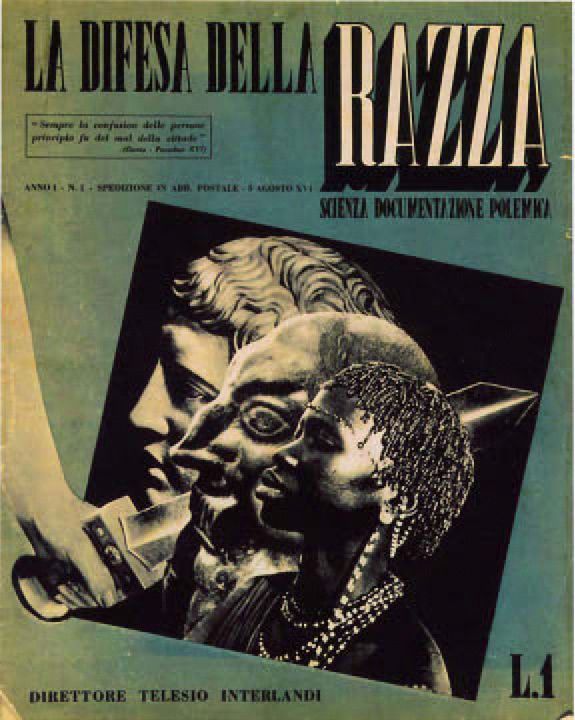
But what role did racism and antisemitism play in Italian Fascism, as well as in the other forms of fascism?[122] Antisemitism's pivotal role in National Socialism – be it "völkisch","racial-biological", "eliminatory" (Goldhagen), or "redemptive" antisemitism (Friedländer) – and the murder of millions of European Jews perpetrated by Germans, made the categorizing of National Socialist ideology under the generic term of fascism appear questionable to scholars in both Germany and Italy.[123] To a certain extent due to Renzo De Felice's exculpatory reading, Italian Fascism's antisemitism, which was expressed in the Manifesto della razza (Charter of Race, July 1938) and in the leggi razziali (race laws of November 1938), was long considered a result of the emulation of Nazi German policies by the Italian regime in the wake of the rapprochment between the dictatoriships in the late 1930s.[124] The zealous Italian support for Germany's deportation of Jews from the Repubblica Sociale Italiana, which had become the "Third Reich's" "occupied ally" in September 1943, was also largely seen as being purely reactive.[125]
But since the 1990s, perceptions of Italian Fascism have shifted, as it became clear that biopolitical and eugenic thinking were also firmly rooted in fin de sìecle Italian academia. And Italian racism – both as it was manifested with respect to the Slavic minorities in Italy's eastern regions and as it targeted the African inhabitants of the Italian colonial empire – proved to be murderous.[126] The notion of antisemitism as a purely imported phenomenon, in particular, has been disproved.[127] While Mussolini's perception of the now more radical and totalitarian northern successor did play a role, his regime's antisemitic policies were intrinsically motivated. Like the racist war launched by Italy against Ethiopia in October 1935, antisemitism was unleashed as a means of reviving the flagging revolutionary/antibourgeois spirit of Italian Fascism. Ultranationalism or radical nationalism were not necessarily accompanied by antisemitism, but generating or integrating antisemitism as an element was always easy for ultranationalists, since in their worldview "the Jew" quickly mutated into the embodiment of the nation's Other.[128]
Does the singular role of National Socialist Germany in the Holocaust remain apparent when the participation of, for example, Italian Fascists, Croatian Ustascha, or the Hungarian Arrow Cross in the implementation of antisemitic policies and their autochthonous antisemitism is considered?[129] Is the radical character of National Socialism reduced if it is subsumed under the generic term fascism? If we refute an essentialist concept of fascism and instead make use of the Michael Freeden's flexible and dynamic morphological model of ideology mentioned above, then it seems possible to do justice to the prominent significance of antisemitism within National Socialism without abandoning the generic concept of fascism.[130] Within the conceptual cluster of National Socialism, antisemitism occupied a more central position than it did within Italian Fascism, for example. Moreover, it was marked by different and stronger links to Marxism, Bolshevism, and liberalism and also to the concepts of Volksgemeinschaft and Lebensraum. The generic term does not imply that any two phenomena labeled in this way, which always develop within their respective national cultural contexts, are identical, but rather that they involve (family) resemblances, which are heuristically useful to address.
Moreover, on the basis of an understanding of fascism in this vein, it seems possible to refer to National Socialism as radical fascism, while avoiding the pitfalls of the politically dubious "causal nexus" argument.[131] As Aristotle Kallis has emphasized, the Nazi regime was "not just more extreme in its ideological synthesis between national-racial 'rebirth' and 'cleansing', but also unscrupulous and fanatical in its praxis".[132] In the course of the "cumulative radicalization " of National Socialism and in conjunction with the widening military, political, and economic horizons of action as well as constraints that the regime faced as it waged war, the significance of antisemitism and the opportunities to implement antisemitic policies grew. Gradually, what was once unthinkable became thinkable and utterable and what was utterable became feasible.[133] Because of the exterminatory policies the Nazi regime put into practice in the war it had unleashed, National Socialism became a catalyst for the radicalization of other fascist movements, Kallis argues. Whereas Italian Fascism had been a paradigm and template for other fascisms in the 1920s and in part in the 1930s, this role was subsequently assumed by the far more radical National Socialism. In this vein, Thomas Schlemmer and Hans Woller recently postulated that National Socialism was a necessary prerequisite for the subsequent radicalization of the European fascists and that the war it unleashed was needed as a catalyst, but that in wartime all fascisms revealed "their true face as ruthless racists and violent anti-Semites, who up to that point in many cases had merely lacked opportunities for development". Under the leadership of and fueled by the National Socialists, the fascists were (re)radicalized, participated willingly in the extermination of the European Jews, and strived to establish a new supranational fascist-racist order in Europe.[134] The transfer processes between the various European forms of fascism, their "entangled history", still await further study.[135]
For more than ninety years, there has been an ongoing controversy on the content and the range of the concept of fascism. As Roger Eatwell has noted, "no other 'ism' has produced such conflicting interpretations".[136] These in part heated debates were rooted in contemporary political conflicts – and sometimes in individual scholars' narcissism – and in an essentialist understanding of the fascism concept. If the generic term is understood as a Platonic universal, this results inevitably in dogmatic nominalist disputes. It thus seems more productive to employ the term as a heuristic construct that enables us to recognize "kinship relations". What family resemblances are revealed in synchronic perspective between the respective national fascisms, as well as in diachronic perspective between fascisms within one country, depends on which ideal type definition one chooses to work with.[137] Since ideal type definitions by their nature highlight only certain aspects of phenomena and relegate others to the background, it is important to retain awareness of these limitations and to combine various ideal types and complementary approaches.[138]
The value of the fascism concept lies, ultimately, in its capacity to facilitate analysis and understanding of those hybrid political phenomena that, in the period between World War I and World War II, not only moved beyond the previous left-right pattern but also transcended the traditional meaning of a number of nineteenth-century political categories. Similarly, political praxis was fundamentally transformed by the paramilitary combat groups and the prerogative state of the single-party dictatorship. The concept of fascism is a tool for elucidating these changes as well as the contexts in which they occurred: the explosion of modernity; World War I; the Bolshevist revolution; the crisis of the liberal system, and the resulting search for a purportedly stable order; the widespread discontent with civilization (S. Freud) and the search for alternative models for living, as manifested most clearly in the Lebensreform and youth movements in Germany; the radicalization and ethnicization of nationalism in World War I and the venomous vehemence with which the "new nationalists" took action against their opponents and against the "Versailles system"; the strain on the existing political system that faced a plethora of problems for which no established strategies were available.
Comparable situations existed in a wide range of European countries. Not only Italy and Germany but also the nations that had emerged from the remnants of the Austro-Hungarian Empire faced similar challenges. The expectations that the war would purify, unite, and bring salvation had been disappointed everywhere in Europe, and liberalism failed to meet the hopes set in it. What remained was a longing for community, orientation, and order and a willingness to try radical solutions for the pressing issues of modernity. Fascism was a response that aimed to satisfy the desire for a new beginning, for a New Man, and for an alternative modernity – that fascism aimed to create on a drawing board, or rather on a tabula rasa created by murdering millions of people.
Translated from the German by Paula Bradish.
Copyright © 2017: Clio-online – Historisches Fachinformationssystem e.V. und Autor:in, alle Rechte vorbehalten. Dieses Werk ist zum Download und zur Vervielfältigung für nicht-kommerzielle Zwecke freigegeben. Es darf jedoch nur erneut veröffentlicht werden, sofern die Einwilligung der o.g. Rechteinhaber vorliegt. Dies betrifft auch die Übersetzungsrechte. Bitte kontaktieren Sie: redaktion@docupedia.de.